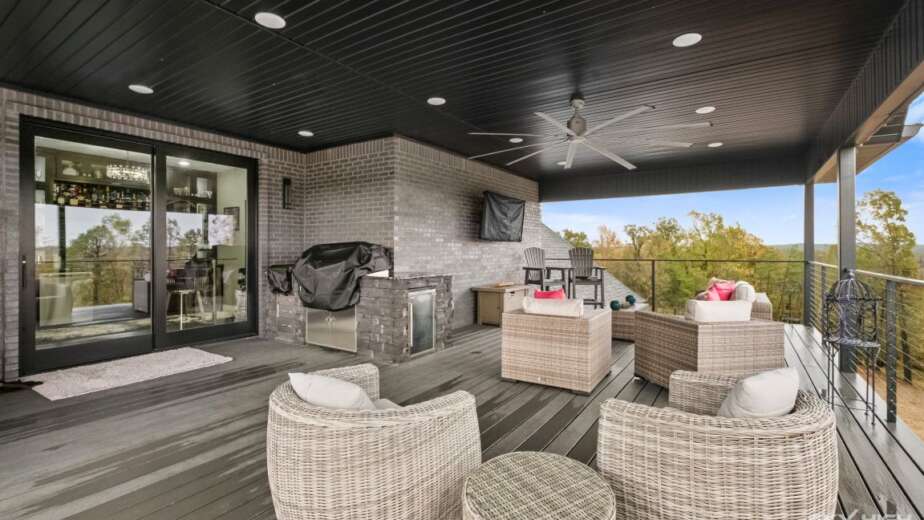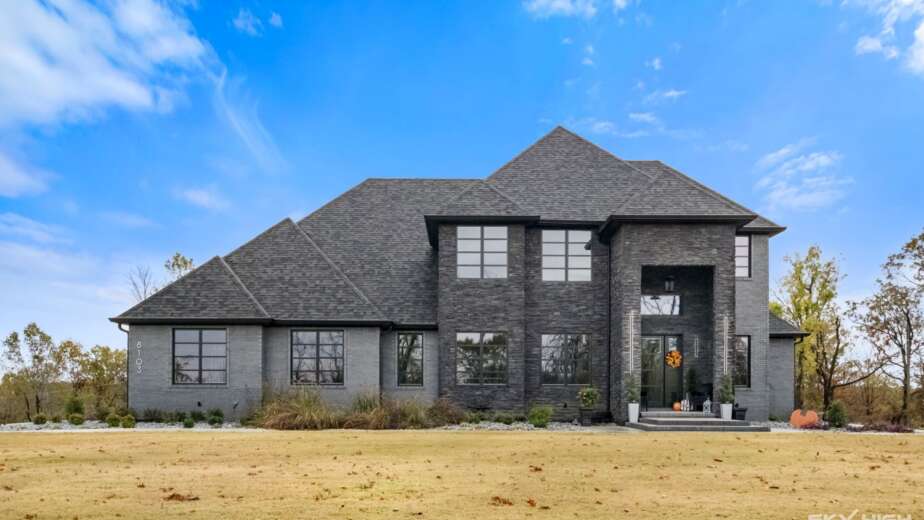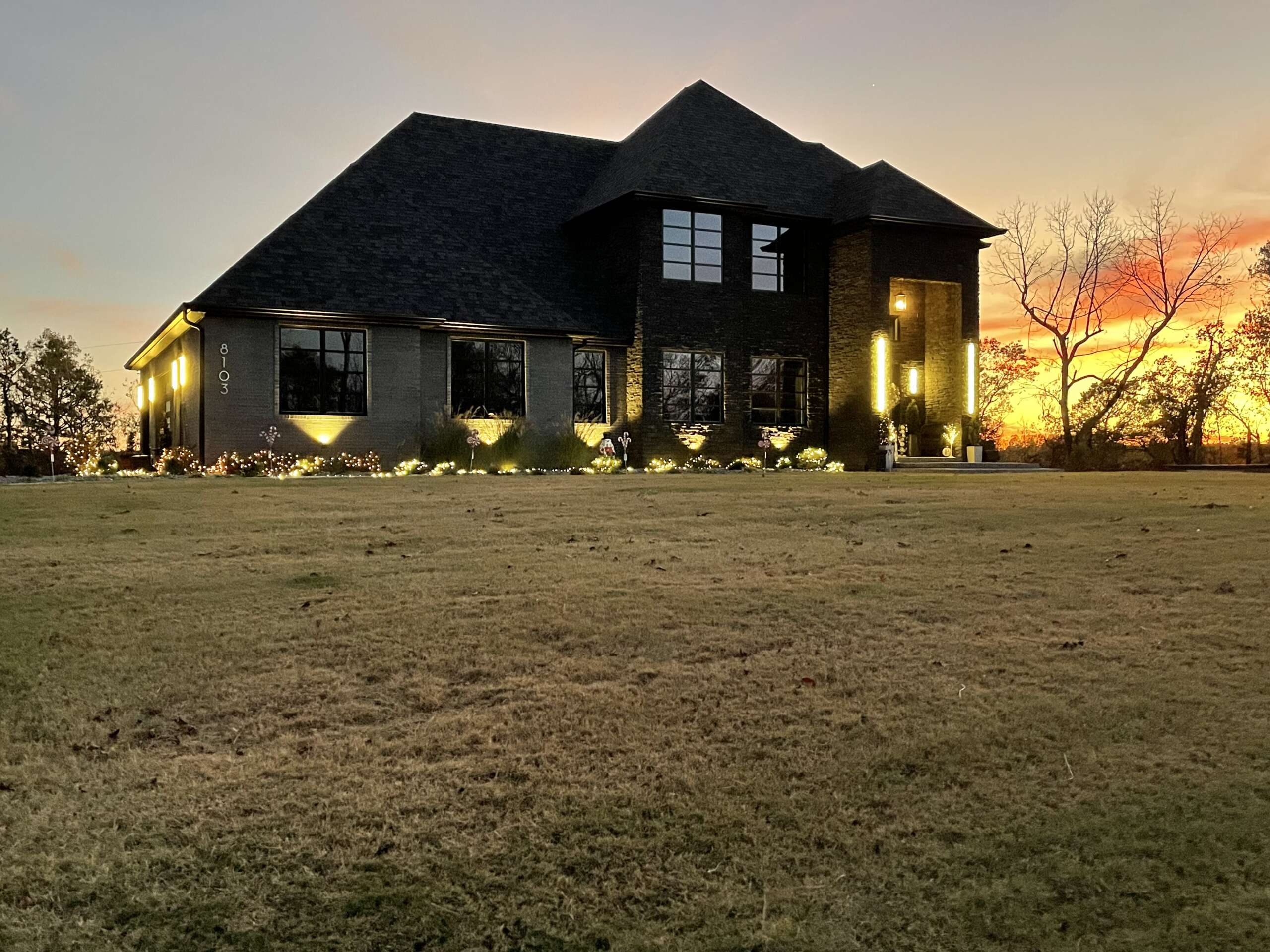
Luxury home contractors do a different job than contractors working at standard price points, and the difference is not mainly about materials. It is about the number of parties to coordinate, the tolerance for error, the length of the relationship, and the expectation that the contractor absorbs complexity rather than passing it to the client. Understanding that difference helps homeowners evaluate firms on what actually matters.
LuxeCraft Custom Homes works throughout Rogers, Bentonville, Bella Vista, Springdale, Fayetteville, Lowell, Cave Springs, and the surrounding Northwest Arkansas communities. This guide covers what luxury home contractors are responsible for, how they work with architects and designers, what trade partner quality means in practice, and what service standard a homeowner should expect at this level.
It is written for people building, renovating, or extending at the high end who want to know what they are actually hiring.
The Coordination Load Is the Job
A luxury project typically involves an architect, sometimes an interior designer, a structural engineer, a civil engineer, a landscape architect, a lighting designer, an audiovisual integrator, and twenty or more trades. Luxury home contractors sit at the center of that and are responsible for making it resolve.
The failure mode at this level is rarely bad workmanship. It is a detail that nobody owned: the lighting designer’s layout that conflicts with the structural beam, the millwork that assumed a wall thickness the mechanical plan changed, the stone selection that arrived in a different lot than the sample.
A capable contractor catches these in coordination review before they are built. That review is invisible work, it never appears in a photograph, and it is most of what separates firms at this level.
Working With Architects and Designers
Luxury home contractors operate in two broad models. In the traditional model, the homeowner engages an architect, the design is completed, and the contractor bids and builds it. In the design-build or integrated model, the contractor is involved from early design, providing cost and constructibility feedback while drawings are still changing.
Both can produce excellent results. The traditional model gives the architect more autonomy and suits homeowners with a strong design vision and a firm they want to work with. The integrated model gives better cost control, because the discovery that a design exceeds budget happens during schematic design rather than at bid.
What matters either way is the relationship. Ask a contractor which architects they have worked with repeatedly. Repeat collaborations are a strong signal, because architects do not send clients back to contractors who made their projects difficult.
Trade Partner Quality
The best crews in any market are booked. They work first for contractors who pay on time, run organized sites, give realistic schedules, and do not force them to fix someone else’s upstream mistake. A contractor’s subcontractor roster is therefore a direct reflection of how the firm operates as a business.
At the luxury level this compounds, because the work requires specialists: finish carpenters who can execute complex millwork, tile setters who can plan a layout so cuts fall where they are least visible, plasterers, stone masons, and mechanical contractors who can run systems in tight ceiling cavities without compromising the design.
Ask luxury home contractors how long they have worked with their framing, mechanical, and finish crews. Long tenure is one of the more honest quality indicators available, and most homeowners never ask.
Project Load and Supervision
The ratio of active projects to superintendents predicts quality more reliably than any marketing claim. A superintendent running three homes is present in a way one running nine cannot be, and presence is what catches problems while they are still cheap.
Luxury home contractors that take a limited number of projects at a time are making a deliberate tradeoff: less revenue, more attention per job. A firm running a high volume at a luxury price point is either exceptionally well staffed or spreading supervision thin, and the second is more common.
Ask how many projects are under construction right now, how many superintendents the firm employs, and whether a principal is still walking each job. Then ask to meet the superintendent who would run yours.
Pricing Transparency at the High End
Budget documents are a quality signal. Luxury home contractors working transparently present line items organized by division, allowances stated explicitly for every unselected item, and contingency identified as its own line. A homeowner can read that document and understand what they are buying.
Allowances deserve particular scrutiny at this level, because luxury selections vary enormously. Two proposals can differ by a hundred thousand dollars purely on allowance levels for tile, plumbing, lighting, and appliances, with no difference in the house being built. Normalize allowances across every bid before concluding anything about price.
Contract structure is typically fixed price or cost plus with a guaranteed maximum. Neither is universally better. What matters is that the homeowner understands which they signed and how it behaves when scope changes, which on a luxury project it will.
Building Performance, Not Just Finishes
This is where the gap between luxury home contractors is widest and where homeowners look least. The envelope determines whether an expensive house is actually comfortable: insulation continuity, air sealing, water management detailing at the exterior, mechanical sizing, and ventilation.
Northwest Arkansas makes this concrete. Humid summers drive cooling load and moisture management. Winter freeze cycles punish assemblies detailed carelessly. A home built to code minimum passes inspection and still runs uneven room to room, manages humidity poorly in August, and costs more every month it stands.
Ask whether the contractor performs blower door testing, how they approach continuous insulation, and who runs their mechanical load calculations. Firms that measure performance rather than assume it answer readily.
The Service Standard
At this level, service expectations are part of the product. That means a named point of contact, regular written updates on schedule and budget status without being asked, a documented change order process, and a selection schedule telling the homeowner when each decision is due.
It also means discretion and site conduct. On an occupied property or in an established neighborhood, how crews park, how they treat neighbors, what hours they work, and how the site looks at the end of each day all matter.
Luxury home contractors who have operated at this level have systems for these things rather than intentions. Ask to see a sample weekly update and a sample selection schedule from a real project. Firms with systems produce them immediately.
Change Orders and How They Are Handled
Change orders are inevitable on complex projects, and how they are managed is where trust is built or lost. Some are client driven, such as upgrading a material or moving a wall. Some are condition driven, such as rock encountered during excavation or a discovered condition in a renovation.
A well-run firm documents each in writing, prices it before work proceeds, and obtains written approval. A firm that performs changes verbally and reconciles at the end is building toward a dispute, and at luxury project values those disputes get expensive.
Ask how change orders are priced, what markup applies, and how long approval takes. Ask to see a real one from a past project.
The First Year After Completion
The relationship does not end at the certificate of occupancy. Materials cycle through their first full year of seasonal humidity and temperature. Systems need adjustment. Small issues surface that nobody could have caught at walkthrough.
Ask what the written warranty covers and for how long, who responds to a call, and whether the firm conducts a formal review before the one-year warranty expires. Many good firms schedule an eleven-month walkthrough as standard practice.
Verify with references rather than accepting the answer. Post-completion responsiveness varies more between luxury home contractors than almost any other factor, and it is almost never discussed during selection.
Scope Beyond New Construction
Many luxury home contractors work across new construction, whole-home renovation, and additions. That range is useful to a homeowner, because the honest answer to a given problem is sometimes not the service a specialist firm happens to sell.
A contractor who only renovates has an incentive to recommend renovating. One who only builds has the opposite. A firm that does both can compare the two credibly and say when a renovation is approaching new construction economics while still carrying the constraints of an existing building.
Ask how the firm’s work splits across these categories. A firm that does a little of everything and a lot of nothing is a different proposition from one with real depth in two or three.
Long Lead Items and Schedule Discipline
Luxury projects carry more long lead items than standard ones, and they are the most common cause of schedule slip. Custom windows, specialty stone, imported tile, bespoke millwork, and high-end appliances can run months between order and delivery, and a single late item can stall an otherwise ready project.
Luxury home contractors who manage this well produce a selection schedule during pre-construction that works backward from installation dates, telling the homeowner exactly when each decision is due. They then hold the homeowner to it, which occasionally feels like pressure and is actually protection.
Ask how the firm tracks lead times, what happens when a selection slips, and what the schedule consequence is. Ask what their last three projects took against what was originally quoted. Firms that track this will answer, and the gap between quoted and actual is one of the more useful numbers a homeowner can get.
Credentials and Due Diligence
Verify licensing through the Arkansas Contractors Licensing Board, confirming it is current, in the right classification, and issued to the entity signing the contract. Confirm general liability and workers compensation coverage with certificates issued directly by the insurer, and ask whether subcontractor coverage is verified.
Financial stability is worth assessing too. A firm in difficulty can leave a project stalled regardless of how good their work is. Watch for unusually large deposit requests, draws running ahead of completed work, or subcontractors asking the homeowner about payment. Lien waivers at each draw are the practical protection.
Why LuxeCraft
LuxeCraft Custom Homes takes a limited number of projects at a time across Northwest Arkansas, with hands-on involvement from the first site walk through the final walkthrough. We build budgets in detail, document changes before work proceeds, coordinate consultants rather than passing conflicts to the client, and stay reachable after move-in.
We work across custom homes, whole-home remodels, and additions, which means we can give an honest comparison rather than steering toward one service. Our local depth means we know these building departments, these subcontractors, and the conditions Northwest Arkansas sites and houses present.
Comparing Luxury Home Contractors? Let’s Connect.
If you are evaluating luxury home contractors for a project in Northwest Arkansas, LuxeCraft Custom Homes welcomes a straightforward conversation about your site, your budget, and what is realistic. We are glad to be one of the firms you compare, and glad to say honestly if we are not the right fit.
Call us at (479) 718-6622 or visit luxecrafthomes.com to start the conversation. We serve homeowners throughout Rogers, Bentonville, Bella Vista, Springdale, Fayetteville, Lowell, Cave Springs, and the surrounding Northwest Arkansas communities.