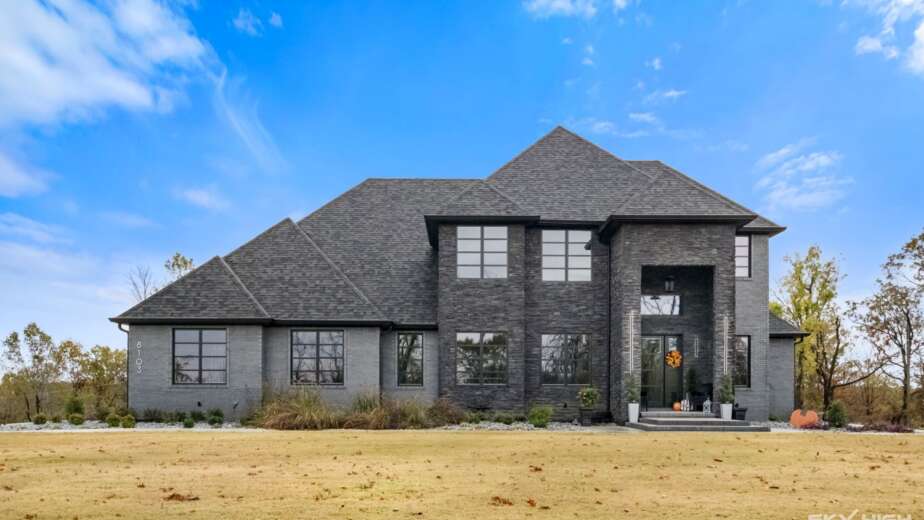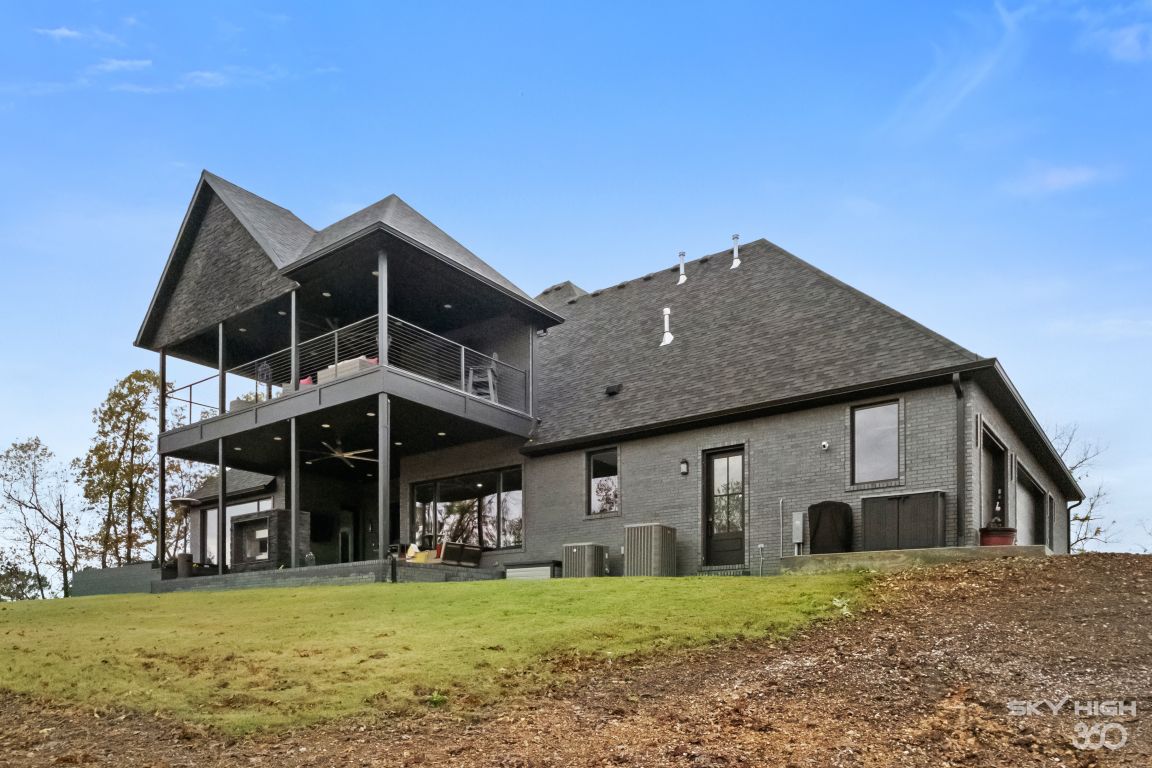
Homeowners occasionally ask whether they could skip the home builder contractor and manage the trades themselves. It is a fair question, and the honest answer depends on what the contractor is actually being paid for. The materials cost what they cost. The subcontractors charge what they charge. The contractor’s fee buys something else entirely, and knowing what that something is makes the decision clear in either direction.
LuxeCraft Custom Homes works throughout Rogers, Bentonville, Bella Vista, Springdale, Fayetteville, Lowell, Cave Springs, and the surrounding Northwest Arkansas communities. This guide goes through what a home builder contractor absorbs on a project, category by category, and what each of those responsibilities looks like if a homeowner carries it instead.
This guide helps people weigh the value of the fee, including anyone considering owner-building.
Sequencing Risk
The largest thing a home builder contractor absorbs is sequencing. A custom home requires excavation, foundation, framing, roofing, plumbing, electrical, HVAC, insulation, drywall, cabinetry, flooring, tile, paint, and finish carpentry. It also requires surveyors, engineers, and inspectors. Each trade must arrive after the prior trade completes its work and passes inspection. Each also has its own calendar.
When sequencing goes wrong, the cost may not appear as a line item. A crew that finds incomplete prior work leaves for another job. It may not return for three weeks. One missed handoff can cost a month. Construction loan interest and interim housing then add real costs.
A homeowner managing this themselves is making twenty phone calls a week to hold a calendar together. That is the job, and it does not pause for a day at the office.
Subcontractor Access
The best framing, mechanical, and finish crews fill their schedules well in advance. They work first for builders who pay on time, run organized sites, give realistic schedules, and do not make them fix someone else’s upstream mistake.
A home builder contractor with long relationships gets those crews on reasonable dates. A one-time owner-builder is a stranger with a single project and no track record, and gets whoever has an opening.
This is the hardest part of the fee to replicate because no one can simply buy it. Regional growth has kept demand for trades high in Northwest Arkansas. As a result, the gap between a builder’s roster and an individual’s options is wider than in a slower market.
Pricing Leverage and Accuracy
Contractors buy materials repeatedly and at volume, which affects both price and delivery priority. They know what a given scope should cost. That knowledge provides another kind of protection when a subcontractor quotes high.
A homeowner receiving three bids with no reference point cannot tell a fair number from a padded one. That information asymmetry is one of the quieter costs of self-managing.
A home builder contractor should also be building the budget from actual conditions rather than assumptions. Survey and soil data for site work. Real quotes for mechanical. Stated allowances for anything not yet selected. A number built that way holds up better than one assembled from per-square-foot averages.
Permitting and Inspection Coordination
Submitting permits, responding to plan review comments, and scheduling inspections create a real workload with real deadlines. Northwest Arkansas is not one environment. Rogers, Bentonville, Springdale, and Fayetteville each have building departments with distinct review timelines and format expectations. Outside city limits, county jurisdiction applies, along with separate health department review for septic.
A home builder contractor who works in a jurisdiction regularly knows each department’s expectations. They submit materials in the required format, which shortens round trips. A homeowner learning the process submits once, gets comments, revises, and resubmits.
Inspections carry schedule risk too. A missed inspection stops the next trade. Inspectors also may not arrive on the day a homeowner requests them.
Liability and Insurance
A home builder contractor carries general liability and workers compensation coverage. The contractor should also verify that every subcontractor carries its own coverage. This structure protects a homeowner if someone suffers an injury on the property.
A homeowner who hires trades directly may be assuming responsibilities they have not considered. Homeowner policies are generally not written for an active construction site, and an uninsured worker injured on a job the homeowner is directing is a problem worth avoiding.
This is one of the more concrete answers to what the fee buys, and it is worth confirming rather than assuming. Ask for certificates issued directly by the insurer, not forwarded copies.
Lien Exposure
If a subcontractor is not paid, they can file a lien against the property. That is true whether the homeowner paid the contractor or not, which is why lien waivers matter.
A well-run home builder contractor collects a lien waiver from every subcontractor at every draw and provides them to the homeowner and the lender. That paperwork is tedious and it is the mechanism that protects the title.
An owner-builder has to run that process themselves, against subcontractors who may not be used to providing waivers. It is one of the less visible administrative burdens of self-managing.
Problem Absorption
Materials arrive damaged. A subcontractor falls behind. Excavation reveals rock nobody expected. A window arrives in the wrong size. These happen on every project, including well-run ones.
What a home builder contractor absorbs is the resequencing, the sourcing, the negotiation, and the schedule recovery. The homeowner hears what happened and what it means. They do not spend a Tuesday finding a replacement crew.
This is the part of the role that is invisible when it goes well, which is why it is easy to undervalue when looking at a fee.
Lender Coordination
Construction loans release funds through draws tied to completed and inspected milestones, each requiring documentation the lender specifies. Staying ahead of that schedule takes ongoing attention from someone who understands both the construction progress and the paperwork.
A home builder contractor who has worked with local lenders knows what each one requires and when. A draw delayed because documentation was incomplete or a milestone inspection was never scheduled stops payment to subcontractors, which stops work.
Northwest Arkansas lenders who write construction loans regularly tend to move faster with builders they know, which is a small advantage that compounds across a dozen draws.
Warranty and the First Year
After the certificate of occupancy, materials cycle through their first full year of seasonal humidity and temperature, systems need adjustment, and small issues surface that nobody could have caught at walkthrough.
A home builder contractor stands behind the work under a written warranty, and a good one conducts a formal review before that warranty expires, often at eleven months. The homeowner makes one call.
An owner-builder has no single point of accountability. Each trade warrants only its own work, if at all, and determining which trade owns a given problem is the homeowner’s job.
Quality Control
Construction quality is largely a function of catching problems before they are covered up. A framing error found the same day costs an hour. The same error found after drywall costs considerably more, and the version nobody finds becomes a callback two winters later.
That requires someone on site who knows what correct looks like across every trade. A home builder contractor is running that inspection continuously, which is why the ratio of projects to superintendents matters so much when evaluating firms.
A homeowner can learn a great deal quickly, but recognizing a subtle framing or flashing error in real time is not something most people acquire in one project.
How the Fee Is Actually Structured
Understanding what the fee buys also means understanding how it is charged, because the two common structures behave differently when things change.
Under a fixed price contract, the home builder contractor states a total and absorbs cost variance within the defined scope. The fee is embedded rather than separately stated, and the number typically carries more contingency inside it. The homeowner gets budget certainty and gives up visibility.
Under a cost plus contract with a guaranteed maximum, actual costs pass through with a stated fee, capped at an agreed ceiling, and unspent contingency generally returns to the homeowner. The homeowner gets visibility into real costs and gives up some certainty.
Neither is universally better, and a home builder contractor who explains the tradeoff clearly before signing tends to run the same way during construction. What matters more than the structure is that draws tie to completed and inspected milestones rather than calendar dates, that lien waivers are required at each draw, and that the scope of work is specific enough that both parties could tell what is included.
Comparing a fixed price against a cost plus proposal requires normalizing allowances first, since the two can look very different while describing the same house.
When Owner-Building Does Make Sense
Honesty here is worth more than a sales pitch. Owner-building can work for someone with construction experience, available time during business hours, existing trade relationships, and tolerance for carrying schedule and liability risk personally. It is most viable on simpler projects.
It works poorly for someone with a demanding job, no local trade network, a construction loan with a tight draw schedule, or a complex custom home. The savings are usually smaller than expected once delays, pricing without leverage, and carrying costs are counted.
A home builder contractor worth hiring will say this plainly rather than pretend the option does not exist.
What to Confirm Before Paying the Fee
Ask how many projects the firm runs at once and who supervises each. Ask to meet that superintendent. Ask how change orders are priced and approved. Ask for a line-item budget with allowances and exclusions stated.
Verify licensing through the Arkansas Contractors Licensing Board, confirming it is current, in the right classification, and issued to the entity signing the contract. Confirm general liability and workers compensation with certificates from the insurer, and ask whether subcontractor coverage is verified.
Ask for references from projects completed two or more years ago, and ask those homeowners how warranty calls were handled.
Why LuxeCraft
LuxeCraft Custom Homes takes a limited number of projects at a time across Northwest Arkansas so each one gets real supervision. We work with subcontractors we have used for years, build budgets in detail rather than in summary, document changes before work proceeds, and stay reachable after move-in.
Our local depth is what makes the coordination reliable. We know these building departments, these lenders, these crews, and the conditions Northwest Arkansas sites actually present.
Looking for a Home Builder Contractor? Let’s Connect.
If you are weighing what a home builder contractor should handle on your project in Northwest Arkansas, LuxeCraft Custom Homes is glad to walk through it honestly, including where self-managing some scope might make sense for you.
Call us at (479) 718-6622 or visit luxecrafthomes.com to start the conversation. We serve homeowners throughout Rogers, Bentonville, Bella Vista, Springdale, Fayetteville, Lowell, Cave Springs, and the surrounding Northwest Arkansas communities.