Knowing what separates the best luxury home builders from the rest is only half the problem. The other half is finding out which firms meet that standard, and most homeowners research the way they would research a restaurant: look at pictures, read reviews, ask a friend. Those methods carry almost no signal in custom construction, and better methods exist.
LuxeCraft Custom Homes builds throughout Rogers, Bentonville, Bella Vista, Springdale, Fayetteville, Lowell, Cave Springs, and nearby Northwest Arkansas communities. This guide ranks homeowner research methods by the information they provide. It also explains what to do with that information.
This guide helps people with a forming shortlist pressure-test it before they commit.
Why Online Reviews Carry Little Signal Here
Review volume on custom builders is naturally low. A firm that completes a handful of homes each year will collect few reviews. That sample is too small to mean much either way.
The content also skews toward extremes. People with great or terrible experiences tend to write reviews. The large middle rarely does. A five-star review at move-in says nothing about performance through two winters. It also says nothing about whether the builder returned warranty calls.
Reviews are worth reading for pattern, not verdict. Three separate people describing the same communication problem is information. A perfect average across six reviews is not.
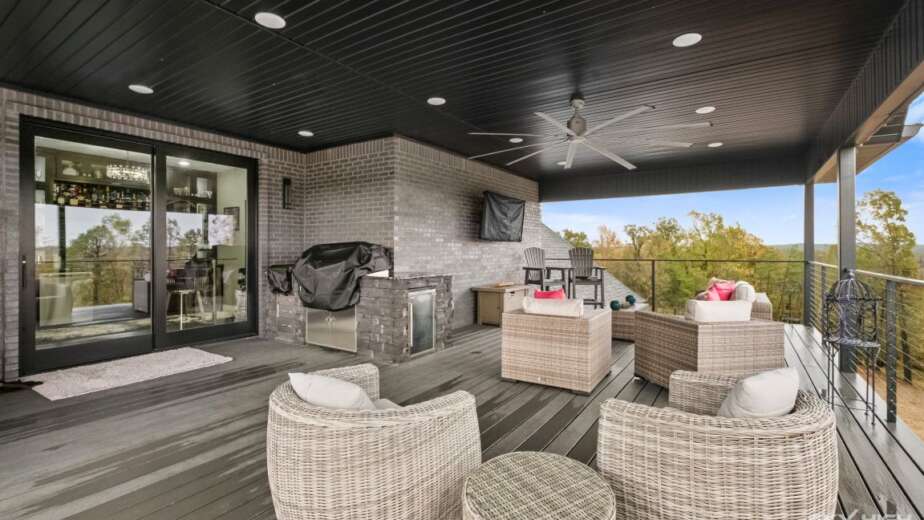
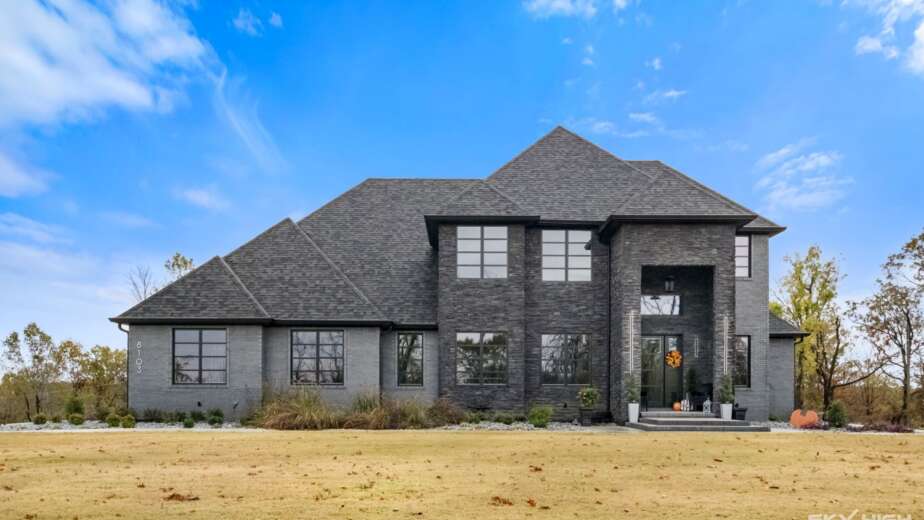
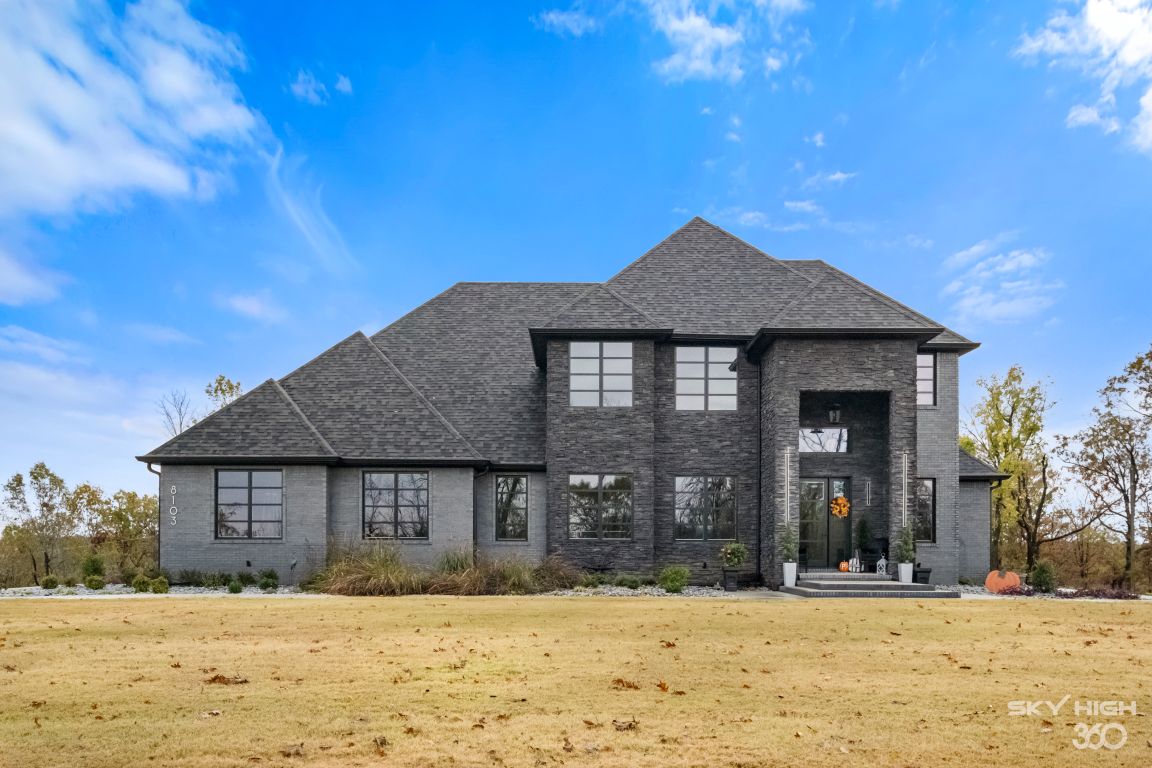
What a Portfolio Does and Does Not Show
A finished photograph shows material selection, design taste, and the photographer’s skill. It cannot show whether the project finished on budget. It also cannot show whether the client spent eighteen months chasing information. Nor can it show whether roof detailing will hold up in fifteen years.
The best luxury home builders and the weakest firms can produce similar-looking portfolios. Both show their best work on their best day. Treat the portfolio as a style filter, not a quality filter. It answers whether a firm’s aesthetic suits you. That is a real question, but it is not the only one.
Look for range rather than one repeated formula. Also ask whether the firm will show you a home in person, not just in photographs.
The Active Job Site Visit
This is the single highest-signal research method available, and most homeowners never ask for it.
Visit a project under construction. Look at whether materials are stored off the ground and protected from weather, whether debris is contained, whether the site is organized enough that a crew arriving in the morning knows where to start. Look at the framing if it is exposed: whether it is plumb, whether blocking is where it should be, whether penetrations are sealed.
Organization is upstream of quality. A site where lumber sits in mud and nobody seems clear on the day’s sequence tends to produce work that reflects the same disorder once drywall covers it.
Willingness matters as much as what you see. A builder who suggests this before you ask is telling you something. One who hesitates is telling you something else.
The Finish-Stage Walk
Ask to see a home at finish stage rather than a staged completed project. This is where craftsmanship is visible and not yet dressed.
Look at trim miters, whether they are tight and consistent. Look at tile layout and where the cuts fall. Look at cabinet reveals across a run. Open and close doors. Check paint coverage in raking light, which shows what a straight-on look does not.
The best luxury home builders are noticeably better here, and the difference comes from the crews they retain and the time they allow for finish work. Rushed finish carpentry is the most common casualty of a compressed schedule and the part of a home a homeowner touches every day.
Reference Calls, Done Properly
Every firm supplies references and nearly all of them are positive, so the questions have to do the work.
Ask what went wrong, because something went wrong on every project, and how the builder handled it. Ask whether the final cost landed near the contract amount and what drove any difference. Ask whether information arrived proactively or had to be chased. Ask how long the punch list took to close.
Then ask the question that separates good firms from adequate ones: what happened when they called with a warranty issue six or twelve months after move-in.
Request at least one reference from a project completed two or more years ago. Distance produces candor, and it reveals how the house has actually performed through a few seasons.
References the Builder Did Not Choose
Supplied references are curated by definition. Two ways around that.
Ask the builder which architects, engineers, and designers they have worked with repeatedly, then call one. Design professionals see how a builder behaves under pressure and have no stake in the sale. Repeat collaborations are themselves a strong signal, because architects do not send clients back to contractors who made their projects difficult.
The other route is subcontractors. Ask who frames for them, who does their mechanical, who does their finish carpentry. Crews know which builders pay on time, run organized sites, and give realistic schedules. A builder who answers readily is comfortable with what you will hear.
Public Records and Permit History
Building department records are public and searchable, and they show which firms actually pull permits in a given jurisdiction and how often.
This is a straightforward way to verify local experience claims. A builder who says they work regularly in Bentonville should appear in Bentonville’s permit history. It also indicates volume, which pairs with the project-to-superintendent ratio question.
Verify licensing through the Arkansas Contractors Licensing Board while you are at it: current status, correct classification, and issued to the entity that will sign your contract rather than a similar-sounding name.
The Questions That Reveal Operations
Some questions are useful mainly because of how they are answered.
How many projects are under construction right now, and how many superintendents do you employ. How long have you worked with your framing, mechanical, and finish crews. Do you blower door test, and who runs your mechanical load calculations. What did your last three projects take against what was originally quoted.
The best luxury home builders answer these quickly because they track them. Firms that deflect, change the subject, or treat the questions as adversarial are giving you the answer indirectly.
Reading the Proposal as Research
The budget document is itself a research finding. A line-item budget organized by division, with allowances stated explicitly for every unselected item, contingency on its own line, and exclusions listed, tells you a firm operates transparently.
A single large number with no breakdown tells you the opposite, and it makes comparison impossible. Two proposals can differ by a hundred thousand dollars purely on allowance levels with no difference in the house being built.
Normalize allowances across every proposal to the same figures, add any scope one firm excluded and another included, then compare again. The firm whose number moves least through that exercise priced the project honestly.
Financial Stability
Uncomfortable to research and worth doing. A firm in difficulty can leave a project stalled regardless of how good their work is.
Signals worth noting: requests for unusually large deposits, draw requests running ahead of completed work, or subcontractors asking the homeowner about payment. Length of time in business is a rough proxy, and firms that have operated through a full economic cycle have demonstrated something newer firms cannot yet.
Lien waivers at each draw are the practical protection regardless of what the research turns up.
Weighing What You Found
Rank the methods by signal: the active job site and finish-stage walk first, then references the builder did not choose, then supplied references asked good questions, then permit records, then the proposal document, then reviews and the portfolio last.
Homeowners usually do this in reverse order, spending hours on photographs and minutes on the methods that would actually tell them something.
If the high-signal methods and the low-signal ones disagree, trust the high-signal ones. A beautiful portfolio and a chaotic job site is a chaotic firm with a good photographer.
How Long the Research Should Take
Homeowners often compress this into two weeks because they are eager to start, which is the one part of a custom project where moving slowly costs nothing.
A reasonable pace: two to three weeks to build a shortlist of three or four firms from permit records, architect referrals, and initial conversations. Another two to three weeks for site visits and finish-stage walks, which have to be scheduled around what each firm has underway. Another week or two for reference calls, which take longer than expected because people do not answer on the first attempt.
That is six to eight weeks of research against a project that will run eighteen to thirty months. Homeowners who invest it tend to experience a build characterized by trust. Those who rush it sometimes find themselves with a firm whose working style does not match what they needed, which is far harder and more expensive to fix once construction is underway.
The best luxury home builders are typically booked out several months regardless, so the research period often runs in parallel with the wait rather than adding to it.
When the Research Says No
Sometimes the honest conclusion is that none of the shortlisted firms is right, or that the project as imagined does not fit the budget. That is a useful outcome of research, not a failure of it.
It is also worth noticing when a firm removes itself. The best luxury home builders turn down work that does not suit them, and a firm that says a project is outside their range or their style is being more useful than one that says yes to everything.
Fit Is Separate From Quality
The best luxury home builders for one family may be wrong for another, and that has nothing to do with competence. A firm accustomed to clients who want weekly involvement will frustrate someone who wants to delegate, and the reverse holds.
Architectural range matters too. Craftsmanship transfers across styles less completely than most firms admit.
The construction period runs twelve to eighteen months or longer. Whether a builder’s communication style and pace suit you matters across that span, and it is worth noticing during research rather than six months in.
Why LuxeCraft
LuxeCraft Custom Homes is comfortable being researched by every method above. We will walk you through an active job site and a home at finish stage, name the architects and crews we work with, and answer the operational questions with real numbers.
We would not call ourselves objectively among the best luxury home builders, because that judgment belongs to homeowners doing this work. What we will say is that we would rather be evaluated on a job site than on a portfolio.
Researching Builders? Let’s Connect.
If you are building a shortlist of luxury builders in Northwest Arkansas, LuxeCraft Custom Homes is glad to be on it and glad to be checked thoroughly.
Call us at (479) 718-6622 or visit luxecrafthomes.com to start the conversation. We serve homeowners throughout Rogers, Bentonville, Bella Vista, Springdale, Fayetteville, Lowell, Cave Springs, and the surrounding Northwest Arkansas communities.