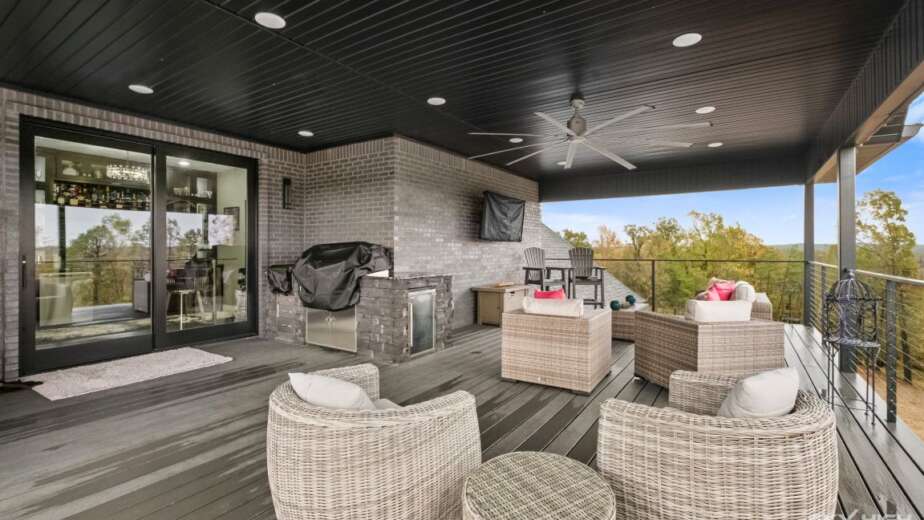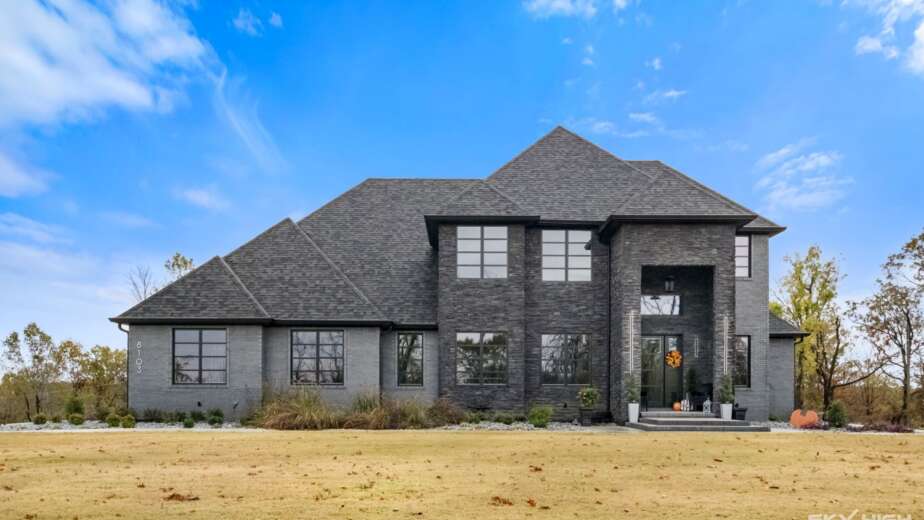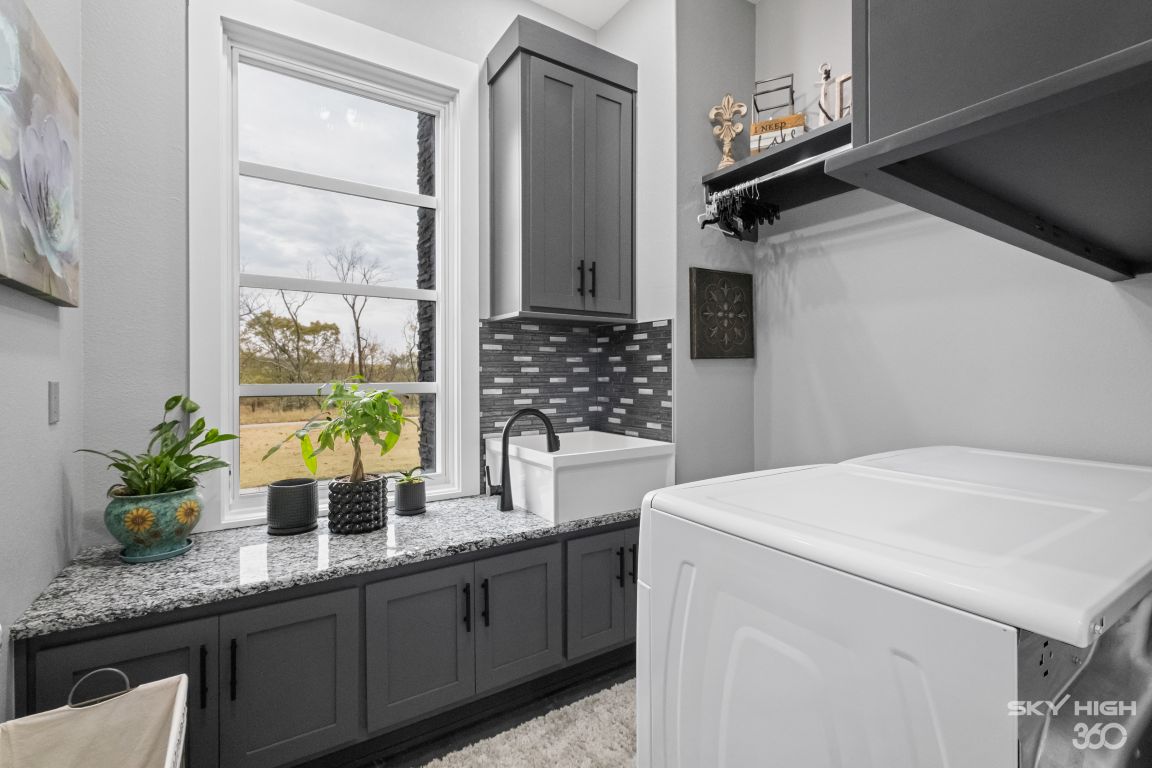
Homeowners comparing high end home builders against production builders usually see a large difference in cost per square foot and a much smaller difference in the photographs. That gap is the honest question worth asking: what does the premium actually buy, and is it buying anything that will matter in ten years.
LuxeCraft Custom Homes builds throughout Rogers, Bentonville, Bella Vista, Springdale, Fayetteville, Lowell, Cave Springs, and nearby Northwest Arkansas communities. This guide examines each category. It explains where the premium is worth paying and where it is not.
This guide helps homeowners decide whether custom construction justifies its cost before they commit.
Fewer Projects, More Supervision
The first thing the premium buys is attention. High end home builders usually manage fewer projects at once. That allows a superintendent to visit regularly instead of cycling through nine jobs.
This may sound soft, but it is not. Construction quality depends largely on catching problems before crews cover them up. Finding a framing error that day costs an hour. Finding it after drywall costs considerably more. If nobody finds it, it can become a callback two winters later.
The project-to-superintendent ratio offers one of the most honest ways to evaluate a builder. Most homeowners never ask for it. A firm that cannot answer quickly is telling you something.
Design Shaped Around One Household
Production builders use proven plans. This approach is efficient and creates real value at its price point. However, it cannot reorganize a plan around how a specific family lives.
High end home builders begin with behavior. They consider where people gather, where they need quiet, how mornings run, and which rooms need the best light. The floor plan answers those questions instead of setting the starting point.
Whether that is worth paying for depends entirely on the household. A family whose needs fit a standard plan should buy that plan. However, some families need multigenerational living, a specific site orientation, or true acoustic separation for work. They are paying for something a plan book cannot deliver.
Structural and Architectural Freedom
Production construction relies on repeatable structural systems. Builders keep spans, roof geometry, and ceiling heights within known ranges to maintain efficiency.
High end home builders can open a span to capture a view or raise a ceiling to give a room volume. They can also shape a roof around the site rather than a catalog. Each choice requires engineering and adds cost. These options are effectively unavailable at the production price point.
Here, the premium clearly buys something real. It is also where costs escalate fastest. Roofline complexity adds framing labor, material, and flashing detail. As a result, two homes with identical square footage can differ substantially in cost.
The Envelope and How the House Performs
This is where the premium buys the most and homeowners look the least. Insulation continuity, air sealing, water management detailing at the exterior, and correctly sized mechanical systems determine whether a house is comfortable and durable over decades.
Northwest Arkansas makes this concrete. Humid summers drive cooling load and moisture management. Winter freeze cycles punish assemblies detailed carelessly. A home built to code minimum passes inspection and still runs uneven room to room, manages humidity poorly in August, and costs more to operate every month it stands.
High end home builders who take this seriously will discuss continuous insulation, blower door testing, and who performs their mechanical load calculations. Firms that measure performance rather than assume it answer readily, and willingness to be tested is itself a signal.
Trade Partner Quality
The best framing, mechanical, and finish crews in any market are booked. They work first for builders who pay on time, run organized sites, give realistic schedules, and do not make them fix someone else’s upstream mistake.
So a builder’s subcontractor roster is a direct reflection of how the firm operates as a business. High end home builders with long crew tenure get better people on better dates, and that shows up in both quality and schedule.
Ask how long a firm has worked with its core trades. Long relationships are one of the more reliable quality indicators available and one of the least commonly requested.
Finish Craftsmanship That Does Not Photograph
Finish quality shows in places a camera rarely captures. Whether trim miters stay tight through a season of humidity cycling. Whether tile layout was planned so cuts fall where they are least visible. Whether cabinet reveals stay consistent across a run. Whether doors swing true and latch cleanly two years later.
The premium buys time for this work. Rushed finish carpentry is the most common casualty of a compressed schedule, and it is the part of a house a homeowner touches every day.
Walking a home at finish stage, rather than a staged completed project, is the fastest way to see whether a firm’s standard is real.
Material Durability Over Material Cost
High end home builders should present material choices with lifecycle context: what it costs now, how it performs over twenty years, what maintenance it needs, and how it will look after a decade of Northwest Arkansas weather.
Durability is frequently the more economical choice as well as the better one. A roof, window, or cladding that lasts twice as long is rarely the cheapest line item and is often the best value in the budget.
This is a place where the premium can also be wasted. Paying for bespoke versions of items that are easily replaced later is less useful than paying for the ones that are not. A builder willing to say where the upgrade is not worth it is more valuable than one who treats every line as an opportunity.
Budget Transparency and Control
A well-run custom project gives the homeowner visibility into cost at the moment decisions are made. Line-item budgets organized by division, allowances stated explicitly, contingency on its own line, and updates as selections are finalized.
Production pricing is simpler because the product is fixed. Custom pricing is more complex and should therefore be more transparent, not less. A high end builder presenting a single large number with no breakdown has taken the harder product and given it the weaker documentation.
Homeowners comparing high end home builders should normalize allowances across bids before drawing conclusions, since two proposals can differ by a hundred thousand dollars purely on allowance level with no difference in the house.
Project Management as a Service
Someone has to sequence every trade, order materials to land on the right dates, coordinate inspections, track the budget, process change orders, and resolve the issues that surface weekly. On a custom project that coordination load is substantial, and it is a real part of what the premium pays for.
Long lead items are where this shows. Windows, appliances, specialty tile, and custom cabinetry can take months between order and delivery. A builder who maps those deadlines during pre-construction protects the schedule. One who discovers a lead time problem when the installer arrives has not been managing it.
Change Orders and Who Absorbs Complexity
On a production home, scope rarely changes, because the product is fixed. On a custom home it always does, and how a firm handles that is a large part of what the premium buys.
Well-run high end home builders document every change in writing, price it before work proceeds, and get written approval. Some changes are homeowner driven, such as upgrading a material or moving a wall. Some are condition driven, such as rock encountered during excavation. Either way the homeowner should see the number before the work happens, not on a reconciliation at the end.
The deeper version of this is who absorbs coordination complexity. On a custom project with an architect, an engineer, a designer, and twenty trades, conflicts between their documents are inevitable. A firm that resolves those before anything is built is doing invisible work that never appears in a photograph. A firm that forwards the conflict to the homeowner has passed its own job along.
Ask how change orders are priced, what markup applies, and ask to see a real one from a past project.
Resale and the Long View
Homeowners sometimes justify custom construction as an investment. That is the weaker argument. The stronger one is that a custom home is built for a household that intends to stay, and the value shows up in daily use over decades rather than in a sale price.
Where high end home builders do affect long-term value is durability and performance. A home with a properly detailed envelope, correctly sized systems, and materials chosen for lifecycle rather than first cost ages differently than one built to minimum standard. Twenty years on, the difference is visible and expensive to replicate.
A custom home that pushes well beyond the ceiling of its street is a lifestyle decision rather than a financial one, which is fine as long as it is made deliberately. A builder who says this plainly is more useful than one who promises every dollar comes back.
Where the Premium Is Not Worth Paying
Honesty here matters. The premium is not worth paying for a household whose needs a good production plan already meets. It is not worth paying for square footage alone, since cost scales with size in both models. It is not worth paying to a firm that charges custom prices while running production-level supervision, which does exist.
It is also not worth paying when the budget is tight enough that the envelope, the mechanical system, or the site work would have to be cut to afford the finishes. A well-built production home outperforms an underfunded custom one.
High end home builders worth hiring will say this directly rather than talk a marginal client into a project that will strain.
What to Verify Before Paying a Premium
Ask the project-to-superintendent ratio. Ask how long the firm has worked with its core trades. Ask whether they blower door test. Ask for a line-item budget with allowances and exclusions stated. Ask to walk an active job site and a home at finish stage.
Verify licensing through the Arkansas Contractors Licensing Board and confirm general liability and workers compensation with certificates issued directly by the insurer. Ask for references from projects completed two or more years ago, and ask those homeowners how warranty calls were handled.
A firm charging a premium should welcome all of it.
Why LuxeCraft
LuxeCraft Custom Homes takes a limited number of projects at a time across Northwest Arkansas, with hands-on involvement from the first site walk through the final walkthrough. We build budgets in detail, treat the envelope and mechanical sizing as engineering rather than line items to trim, and work with trades we have used for years.
Among high end home builders in the region, what we lead with is local depth and a willingness to be evaluated on every measure above, including the ones that are uncomfortable to ask about.
Weighing a Custom Build? Let’s Connect.
If you are deciding between production and custom construction in Northwest Arkansas, LuxeCraft Custom Homes is glad to give you an honest read on whether a custom build makes sense for your situation, including when it does not.
Call us at (479) 718-6622 or visit luxecrafthomes.com to start the conversation. We serve homeowners throughout Rogers, Bentonville, Bella Vista, Springdale, Fayetteville, Lowell, Cave Springs, and the surrounding Northwest Arkansas communities.