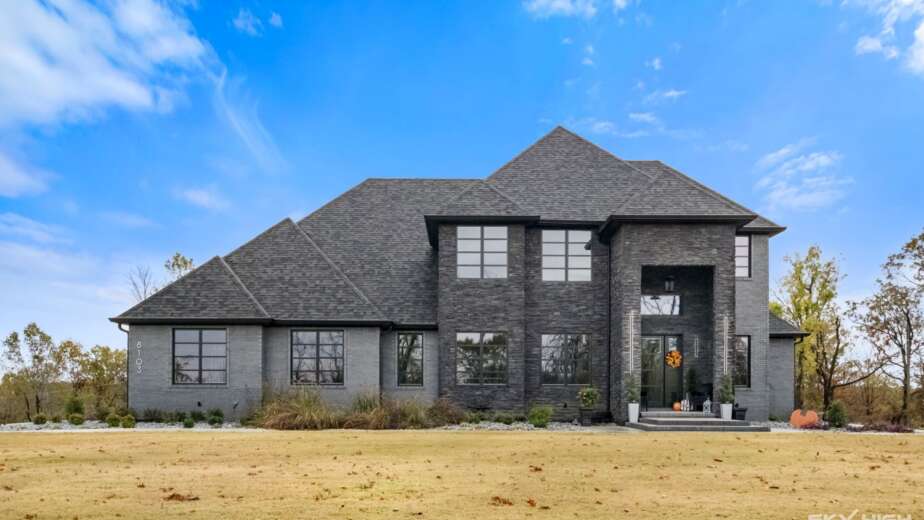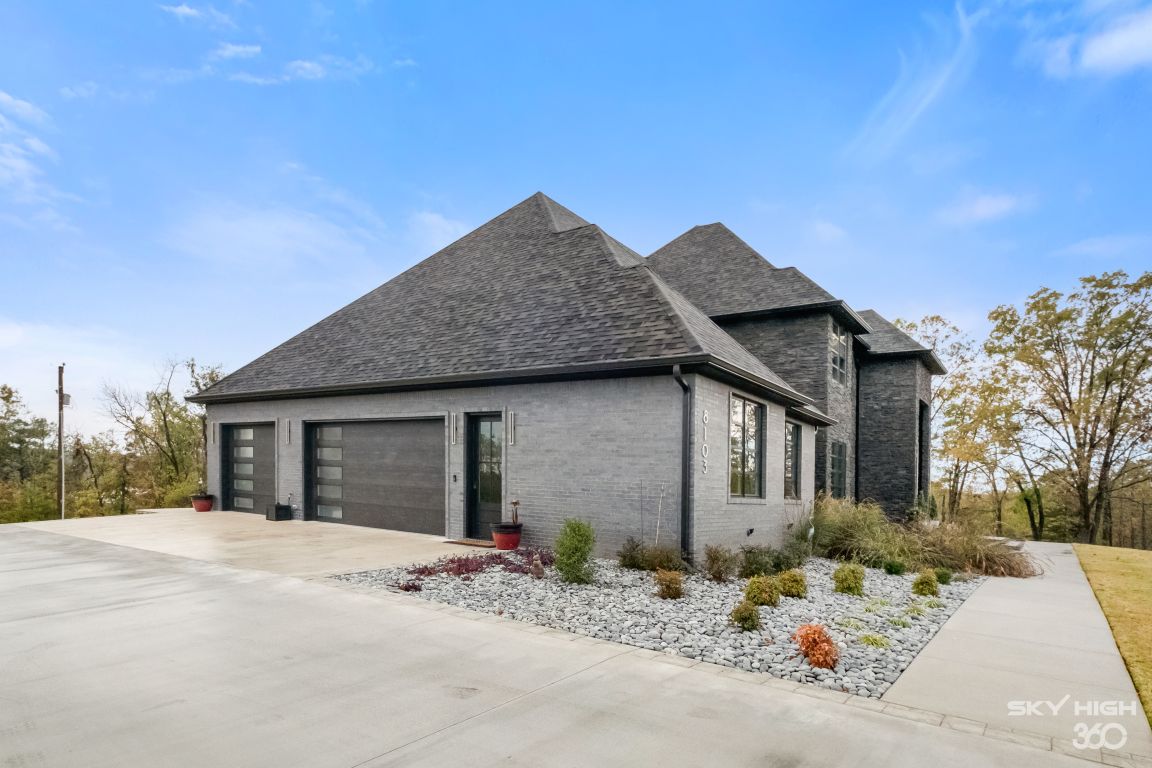
Luxury home additions succeed or fail on one question: does the new space read as part of the home or as something attached to it? Square footage is the easy part. The real work is matching proportion, materials, light quality, and finish level. That is where most additions fall short.
LuxeCraft Custom Homes builds luxury home additions and custom homes across Northwest Arkansas. We serve Rogers, Bentonville, Bella Vista, Springdale, Fayetteville, Lowell, Cave Springs, and nearby communities. This guide explains common addition types, what separates them from standard work, and how to plan an expansion that works architecturally and in daily life.
This guide helps homeowners in well-built houses who want more space without leaving the home they value.
What Makes an Addition a Luxury Addition
The distinction is not cost; it is standard. A luxury addition must match the existing home’s finish level, structural quality, and design coherence. On a high-end home, that is a demanding target. A standard addition solves a space problem. A luxury addition solves it without making the house look patched together.
That means matching ceiling heights rather than defaulting to eight feet. It means millwork profiles that continue the existing vocabulary. It means matching the window manufacturer, glazing, and sightline proportions. It also means creating the same comfort in the new space as in the old. No one wants a room that runs warm in August.
It also means matching building performance. A weaker envelope will make the new space less comfortable than the house it joins. Homeowners notice that difference every day, regardless of the finishes.
Primary Suite Additions
A primary suite is one of the most common luxury home additions. Homeowners often need it because the existing primary suite is undersized, poorly located, or missing the bath and closet they want. These additions typically include a bedroom, full bath, dressing area or walk-in closet, and often a private outdoor connection.
The design questions are specific. Where does the suite sit relative to the rest of the house, and does the circulation still make sense. How does it get morning light without getting afternoon heat. Can plumbing reach it without a long run. Does adding a bedroom trigger septic review on properties outside city limits.
Primary suite additions carry higher cost per square foot than general living space because of the bath. Plumbing, tile, glass, ventilation, and heated floors in a luxury bath add up quickly. Give the specification decisions early budget attention rather than waiting for late allowance reconciliation.
Guest and In-Law Suites
Multigenerational living drives a meaningful share of luxury home additions in Northwest Arkansas. Families use these spaces to bring parents closer or accommodate extended visits. These additions usually include a bedroom, full bath, sitting area, and often a kitchenette with a separate entrance.
Privacy design is the central challenge. Acoustic separation between the suite and the main house matters more than homeowners expect. Build it into the framing details, insulation, and door selection rather than adding it later. Separate HVAC zoning is usually worth the cost because occupancy patterns differ.
Consider accessibility planning even when you do not need it yet. Wider doorways, a curbless shower, blocking in the bath walls for future grab bars, and a level entry cost little during construction. They cost far more to retrofit.
Great Room and Kitchen Expansions
Many luxury home additions extend the main living space, opening a closed kitchen into a larger gathering area or pushing the back of the house out to improve flow and light. These projects usually involve removing load-bearing walls, which means engineering and a beam solution.
Where that beam sits matters architecturally. A flush beam that disappears into the ceiling costs more than a dropped beam and is usually worth it in a luxury home, because a visible structural element in the middle of a new great room undercuts the result the homeowner paid for.
Light is the other variable. Expanding living space often means the original windows are now too far from the center of the room. Addressing that with additional glazing, a roof monitor, or clerestory windows is what separates an expansion that feels generous from one that feels deep and dim.
Indoor and Outdoor Living Connections
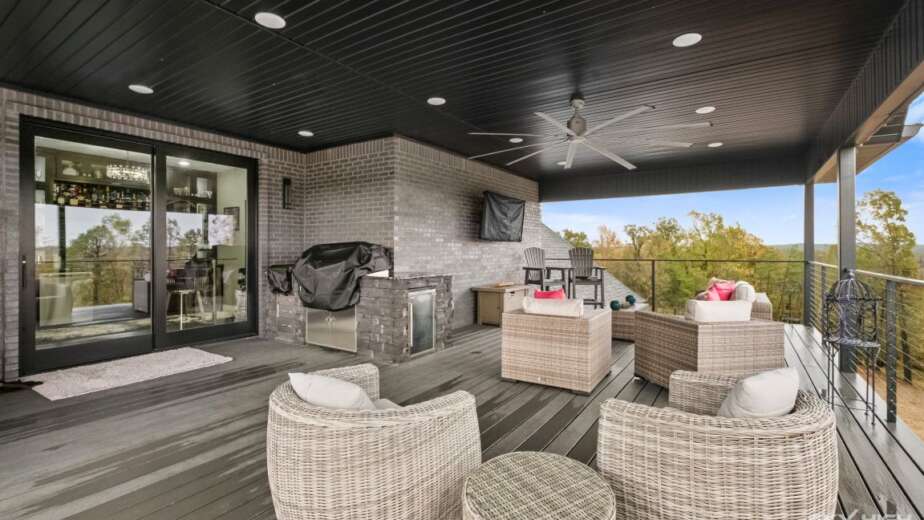
Covered outdoor living is one of the stronger-performing luxury home additions in the Northwest Arkansas climate, where spring and fall are genuinely usable and summer evenings are pleasant in shade with air movement. These range from a covered porch with a fireplace to a full outdoor kitchen and dining area under a structural roof.
Design integration matters here as much as anywhere. The roof over an outdoor living space has to resolve into the existing roof geometry rather than appear bolted on. Column proportion, ceiling treatment, and material continuity are what make the space read as architecture rather than as a patio cover.
Practical considerations follow: drainage away from the house, screening or retractable screens for insects, ceiling fans sized correctly for the volume, and electrical and gas rough-in planned before the slab is poured rather than chased afterward.
Second-Story Additions
Building up is the most structurally demanding of the luxury home additions. The existing foundation and framing must be evaluated and often reinforced to carry new load, which means engineering and sometimes foundation work that is invisible in the finished result but significant in the budget.
The compensation is that no footprint is lost, which matters on a constrained lot or one where the yard is part of the value. Second-story additions also allow a new primary suite upstairs while converting the old one to another use, which can solve two problems at once.
Sequencing is the hard part. The house is partially opened during framing, which requires weather protection and careful scheduling. Most families move out for at least part of a second-story addition, and the schedule generally runs longer than comparable square footage added at grade.
Matching Materials on a High-End Home
Material matching is harder on luxury homes than on standard ones, because the materials are less generic. A custom brick blend, a specific stone, a discontinued siding profile, or a window line that has changed since the house was built can all be difficult to source.
Three approaches work. Match exactly where the material is still available, and buy enough to cover waste and future repair. Source a close match and use it in a way that reads as intentional, such as on a separate elevation rather than mid-wall. Or differentiate deliberately with a clear material change that announces itself as a design decision rather than a failed match.
The approach to avoid is the near-match that is close enough to look like an attempt and different enough to read as a mistake. On luxury home additions this is the most common visible failure, and it is permanent.
Building Performance in the New Space
Northwest Arkansas puts real demand on an envelope. Humid summers drive cooling load and moisture management. Winter freeze cycles punish careless detailing. An addition built to code minimum attached to a high-performance house will be the room nobody wants to sit in during August.
Luxury home additions should carry continuous insulation, careful air sealing, correctly detailed water management at the exterior, and mechanical sizing based on a real load calculation rather than a rule of thumb. Whether the addition extends existing HVAC or gets its own zone should be an engineering decision, not a cost shortcut, because extending undersized ductwork degrades performance in both the new space and the original house.
Ask whether the builder performs blower door testing. Firms that measure performance rather than assume it will have an answer ready.
Budget and Timeline Expectations
Cost on luxury home additions is driven by complexity more than size: foundation work, structural modification, roof geometry, bath count, and finish level. A great room expansion with a flush beam and extensive glazing can cost more than a larger, simpler bedroom addition.
A complete budget includes design and engineering, permits, structural work, any mechanical or electrical capacity upgrades, containment, and contingency at fifteen percent or more. Allowances should be stated explicitly for every unselected item, and homeowners comparing bids should normalize those allowances before drawing conclusions.
Design and permitting typically run two to four months. Construction runs three to five months for a single-room addition, six to nine for a larger wing, and longer for second-story work.
Specialty Spaces Worth Planning Carefully
Beyond the common forms, luxury home additions often include spaces with specific technical requirements. A home gym needs floor structure rated for equipment load, dedicated ventilation, and sound isolation from living areas. A wine room needs insulation, vapor control, and dedicated cooling that a standard closet conversion cannot provide.
A media room needs acoustic treatment designed in rather than added, along with electrical and low-voltage planning before drywall. A home office that will actually be used for calls needs acoustic separation from household noise, which comes from framing and door selection rather than from a rug.
Each of these fails quietly when treated as a finish decision rather than a building decision. The requirements belong in design, which is another reason builder involvement early matters on luxury home additions.
Value and Resale Considerations
Most homeowners building luxury home additions are solving a lifestyle problem rather than making an investment, and that is a reasonable basis for the decision. It is still worth understanding how the project sits against the market.
In strong Northwest Arkansas neighborhoods, additions that add a bedroom, a full bath, or genuinely usable living space tend to hold value reasonably well. Additions that are highly specific to one household, or that push a home well beyond the ceiling of its street, are lifestyle decisions and should be made knowingly rather than with a resale assumption attached.
A builder who will say this plainly is more useful than one who tells a homeowner every dollar comes back. Honest framing here is part of what separates good firms from firms selling a project.
Choosing a Builder for Luxury Home Additions
Addition work on a high-end home requires both remodeling judgment and custom home craftsmanship, which not every firm carries. Ask how many luxury home additions the builder has completed, and ask to see them in person rather than in photographs. The junction where new meets existing is visible standing in the yard, and it tells the truth.
Ask whether they assess the existing structure before designing. Ask who supervises the site daily. Ask for references from addition clients two or more years out, and ask those homeowners whether the addition still reads as part of the house.
Why LuxeCraft
LuxeCraft Custom Homes builds luxury home additions to the same standard as our ground-up custom homes. We assess the existing structure before we design, detail the transitions between new and existing construction carefully, and hold the addition to the finish and performance level of the house it joins.
Our local depth across Northwest Arkansas means we know these building departments, these neighborhoods, and where materials can actually be sourced. We also build custom homes, which means we can give an honest read on whether an addition or a new build better serves what a family is trying to accomplish.
Planning a Luxury Addition? Let’s Connect.
If you are considering luxury home additions in Northwest Arkansas and want a clear assessment of what your home will support architecturally and structurally, LuxeCraft Custom Homes is glad to take a look.
Call us at (479) 718-6622 or visit luxecrafthomes.com to start the conversation. We serve homeowners throughout Rogers, Bentonville, Bella Vista, Springdale, Fayetteville, Lowell, Cave Springs, and the surrounding Northwest Arkansas communities.